

Picture serving a perfectly chilled vintage from a sleek, built-in cooler that blends into your bar. You’ll appreciate how dual-zone precision and low-vibration compressors protect delicate bottles while compact sizes fit under counters or stand tall as a centerpiece. I’ll walk you through six top models—from 12-bottle under-counter units to a 190-bottle tower—so you can pick the right balance of capacity, features, and style for your space.
| 15″ 30-Bottle Dual-Zone Under-Counter Wine Cooler |  | Versatile Dual-Zone | Capacity: 30 bottles (3.1 cu ft) | Installation Type: Built-in or freestanding (front-vented) | Temperature Control: Dual-zone 40–55°F (upper) / 55–65°F (lower); digital control | VIEW LATEST PRICE | Read Our Analysis |
| Mini 12-Bottle Compressor Wine Fridge with Glass Door |  | Slim Space-Saver | Capacity: 12 bottles | Installation Type: Built-in or freestanding (countertop or floor) | Temperature Control: Single-zone 41–64°F; digital touch control | VIEW LATEST PRICE | Read Our Analysis |
| 11″ Under-Counter 12-Bottle Wine Fridge |  | Compact Controller | Capacity: 12 bottles | Installation Type: Built-in or freestanding | Temperature Control: Single-zone 40–65°F; digital control | VIEW LATEST PRICE | Read Our Analysis |
| Tylza 15″ Dual-Zone 30-Bottle Wine Cooler | 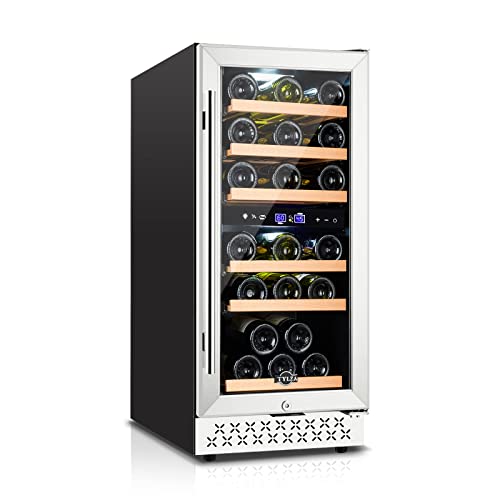 | Premium Dual-Zone | Capacity: 30 bottles (3.6 cu ft) | Installation Type: Built-in or freestanding (freestanding or built-in) | Temperature Control: Dual-zone 40–55°F (upper) / 55–65°F (lower); digital touch control | VIEW LATEST PRICE | Read Our Analysis |
| Tylza 18-Bottle Compressor Wine Fridge with Lock |  | Secure Mid-Size | Capacity: 12–18 bottles (listed variably; 45 L / 12 bottles or model name 18) | Installation Type: Built-in or freestanding / undercounter | Temperature Control: Single-zone 41–65°F; digital touchscreen (1°F precision) | VIEW LATEST PRICE | Read Our Analysis |
| 24″ 190-Bottle Freestanding/Built-In Wine Cooler Refrigerator |  | High-Capacity Pro | Capacity: Up to 190 bottles | Installation Type: Built-in or freestanding | Temperature Control: Single-zone 40–65°F; touch control with memory | VIEW LATEST PRICE | Read Our Analysis |
More Details on Our Top Picks
15″ 30-Bottle Dual-Zone Under-Counter Wine Cooler
Should you want a compact, under‑counter cooler that keeps both whites and reds at ideal serving temps, this 15″ 30‑bottle dual‑zone unit is a smart pick — its separate 40–55°F and 55–65°F zones let you store chilled whites above and ready‑to‑drink reds below without wasting space. You’ll appreciate the 3.1 cu ft capacity, six sliding shelves, and soft LED lighting in a 23.03 x 14.96 x 33.46-inch, counter‑depth form. Front ventilation suits built‑in or freestanding installs. The brushed stainless steel, tempered glass door offers UV protection. It runs quietly (≈38 dB), uses 165 kWh/year, and includes digital controls plus child lock.
- Capacity:30 bottles (3.1 cu ft)
- Installation Type:Built-in or freestanding (front-vented)
- Temperature Control:Dual-zone 40–55°F (upper) / 55–65°F (lower); digital control
- Door Type / Glass:Brushed stainless steel door with double-layer tempered glass (UV protection)
- Cooling Technology (Compressor):High-efficiency energy-saving compressor; low vibration
- Interior Shelving (Adjustable / Removable):Six sliding shelves (removable/adjustable implied)
- Additional Feature:Front ventilation design
- Additional Feature:Child safety lock
- Additional Feature:Low-vibration operation
Mini 12-Bottle Compressor Wine Fridge with Glass Door
Should you live in a small space and want reliable temperature control for a modest collection, this mini 12-bottle compressor wine fridge is a great fit. You’ll store twelve standard Bordeaux bottles on five adjustable stainless steel mesh shelves, with a bottom area for odd shapes or cans. Its 30.7″ H x 10.7″ W x 19.29″ D slim profile works countertop or floor-standing, freestanding or built-in. Digital touch controls set 41–64°F and control LED interior lighting. A low-vibration compressor, 360° fan, insulated double-pane glass, sealing strips, concealed handle, and safety lock preserve flavors quietly and securely.
- Capacity:12 bottles
- Installation Type:Built-in or freestanding (countertop or floor)
- Temperature Control:Single-zone 41–64°F; digital touch control
- Door Type / Glass:Double-layer tempered insulated glass door (UV protection)
- Cooling Technology (Compressor):High-efficiency compressor with low-vibration design
- Interior Shelving (Adjustable / Removable):Five adjustable stainless steel mesh wire shelves; removable
- Additional Feature:Concealed door handle
- Additional Feature:Premium sealing strips
- Additional Feature:360° high-speed fan
11″ Under-Counter 12-Bottle Wine Fridge
Should you’ve got limited space but want reliable temperature control, the 11″ under-counter 12-bottle wine fridge is a great fit for apartments, offices, or a secondary cellar. You’ll store up to twelve 750 ml bottles on five adjustable stainless-steel waved shelves, with bottom space for odd bottles or cans. Digital controls and an LCD let you set 40–65°F and 50–80% humidity; it restores settings after power loss. A high-performance compressor, ≤42 dB low-vibration operation, and 360° circulation guarantee even cooling and minimal aging. Double-pane tempered glass, tight seals, automatic defrost, and versatile built-in or freestanding installation round it out.
- Capacity:12 bottles
- Installation Type:Built-in or freestanding
- Temperature Control:Single-zone 40–65°F; digital control
- Door Type / Glass:Double-layer tempered glass door (UV protection)
- Cooling Technology (Compressor):Upgraded high-performance compressor; low-vibration ≤42 dB
- Interior Shelving (Adjustable / Removable):Five adjustable stainless-steel waved wired shelves; removable
- Additional Feature:Humidity control 50–80%
- Additional Feature:Automatic defrost function
- Additional Feature:Power-loss memory
Tylza 15″ Dual-Zone 30-Bottle Wine Cooler
Should you want a compact dual-zone cooler that fits under counters but still holds up to 30 bottles, the Tylza 15″ Dual-Zone is a smart choice—its 3.6 cu ft interior and separate 40–55°F / 55–65°F zones let you store reds and whites at their ideal temperatures while a quiet, anti-vibration compressor and beech wood shelves protect delicate corks and labels. You’ll appreciate stainless-steel trim, double-glazed glass, digital touch controls, and LED lighting with timing. The unit is freestanding or built-in, frost-free, DOE and ETL certified, and includes a safety lock, filter, and temperature-memory feature. Allow 24 hours before use.
- Capacity:30 bottles (3.6 cu ft)
- Installation Type:Built-in or freestanding (freestanding or built-in)
- Temperature Control:Dual-zone 40–55°F (upper) / 55–65°F (lower); digital touch control
- Door Type / Glass:Double-glazed thermopane glass door (stainless steel + glass)
- Cooling Technology (Compressor):Advanced compressor with cold air circulation; anti-vibration
- Interior Shelving (Adjustable / Removable):Six beech wood shelves; removable/adjustable
- Additional Feature:Built-in air filter
- Additional Feature:Two LED timing settings
- Additional Feature:Safety lock with keys
Tylza 18-Bottle Compressor Wine Fridge with Lock
Provided that you want a compact, lockable wine fridge that fits under a counter and keeps bottles vibration-free for aging, the Tylza 18-Bottle Compressor Wine Fridge delivers with inverter compressor cooling, a 41–65°F range and an anti-vibration design—plus a child lock and keys for added security. You’ll appreciate its 19.3 x 13.6 x 30.7-inch footprint, 45L capacity with five removable chrome shelves and ten slots, and frost-free operation with 360° air circulation. Low-E double-pane glass, activated carbon filtration, soft LED lighting, and <35 dB noise make it discreet. Touch controls, adjustable feet, ETL certification, and a 12-month warranty round it out.
- Capacity:12–18 bottles (listed variably; 45 L / 12 bottles or model name 18)
- Installation Type:Built-in or freestanding / undercounter
- Temperature Control:Single-zone 41–65°F; digital touchscreen (1°F precision)
- Door Type / Glass:Low-E coated double-layer tempered glass door (airtight seal)
- Cooling Technology (Compressor):Inverter compressor (compressor cooling), frost-free; no vibration (<35 dB)
- Interior Shelving (Adjustable / Removable):Five removable metal/chrome shelves; adjustable
- Additional Feature:Inverter compressor technology
- Additional Feature:Activated carbon filtration
- Additional Feature:Includes spare adjustable legs
24″ 190-Bottle Freestanding/Built-In Wine Cooler Refrigerator
Should you need high-capacity storage without sacrificing a 24-inch footprint, this 190-bottle freestanding/built-in wine cooler is for you: its smooth sliding rail shelves and reversible door make it ideal for serious collectors who want easy access, flexible installation, and reliable temperature control. You get a 24″ unit holding up to 190 Bordeaux bottles, with sliding rails that reach rear rows. The double-layer tempered glass door insulates and blocks light; the reversible hinge supports built-in or standalone setups. Temperature spans 40–65°F via a touch panel with memory. Wind cooling, energy-efficient compressor, activated carbon filter, low-noise operation, and 12-month support complete the package.
- Capacity:Up to 190 bottles
- Installation Type:Built-in or freestanding
- Temperature Control:Single-zone 40–65°F; touch control with memory
- Door Type / Glass:Double-layer tempered glass door
- Cooling Technology (Compressor):Energy-efficient compressor with wind cooling system
- Interior Shelving (Adjustable / Removable):Smooth sliding rail shelves (multiple rows; accessible rear rows)
- Additional Feature:Reversible door upgrade
- Additional Feature:Activated carbon filter
- Additional Feature:Smooth sliding rail shelves
Factors to Consider When Choosing Built In Wine Cellars
Upon choosing a built-in wine cellar, you’ll want to match capacity to your collection and check the temperature range options for both red and white wines. Make sure the unit supports proper built-in ventilation and keeps noise and vibration to a minimum to protect corks and labels. Also consider door type and insulation to maintain steady conditions and improve energy efficiency.
Capacity And Bottle Count
Although bottle counts are a handy headline, you’ll want to dig into bottle types, shelf layout and usable cubic feet to know what a built-in cellar will really hold. Start with estimating capacity using your bottle mix: standard 750 ml Bordeaux set the baseline, but Burgundy, Champagne and magnums take more room and cut total count. Check usable cubic feet and shelving—under-counter units (about 3.0–3.6 cu ft) typically hold ~12–30 bottles depending on removable shelves. Plan for growth when selecting 20–30% extra capacity beyond your current cellar. Keep in mind dual-zone and accessory space can reduce shelf capacity, and built-in/counter-depth installations need careful cabinet dimension and door-swing measurements to make certain advertised counts are realistic.
Temperature Range Options
Now that you’ve checked capacity and shelving, turn attention to temperature range—it’s what actually preserves and develops the wines you store. Should you mostly keep one type, choose a single-zone cellar held steady around 50–59°F to support aging stability. When you need whites and reds together, pick a dual-zone unit with roughly 40–55°F for whites and 55–65°F for reds so each drinks at its best. For diverse collections—or occasional chilling—ensure the range covers at least 40–65°F. Require 1–2°F precision and a memory/restore feature to recover settings after outages. Finally, prioritize low fluctuation and even circulation (compressor cooling plus a circulation fan) because swings over a few degrees speed aging and risk spoilage.
Built-In Ventilation Needs
Keep airflow moving: built-in wine coolers need front or toe-kick ventilation to expel compressor heat, so plan at least 1–2 inches of clearance or a vented toe-kick to maintain proper airflow. Measure cabinet height and depth, and match the ventilation opening area to the manufacturer’s guidelines—too little venting raises internal temps and forces longer compressor cycles. For dual-zone or larger units, provide continuous airflow paths (top-to-bottom or front-toe kick) so heat doesn’t build up and disturb your 40–65°F setpoints. Keep vents unobstructed and don’t enclose the unit behind sealed doors without dedicated grilles. In tight spots, install external ventilation accessories or ducting to route heat away from the cabinet and preserve cooling performance and equipment lifespan.
Noise And Vibration Levels
Because your wine cellar will usually sit near inhabited spaces, pay close attention to noise and vibration specs upon choosing a built‑in model. Excessive vibration from compressors or fans can disturb sediments and accelerate chemical reactions, so pick units labeled “low vibration” or with inverter/high‑efficiency compressors. Aim for noise ratings around 35–42 dB or lower; bear in mind reported dB values are idealized and room acoustics or proximity can increase perceived sound, so allow a margin of several decibels. Verify manufacturer specs for front‑vented, built‑in designs since enclosed cabinets might force higher fan speeds. Look for anti‑vibration features—anti‑shake shelving, rubber‑mounted compressors, and sturdy adjustable feet—to isolate mechanical oscillation and help protect cork integrity and wine quality.
Door Type And Insulation
Upon choosing a built‑in wine cellar, pay close attention to the door and its insulation since they’re your initial line of defense against temperature swings, humidity loss, and UV damage. Pick double‑layer or tempered insulated glass with low‑E or UV coatings to cut heat transfer and block harmful rays. Opt for thicker, multi‑pane construction to raise R‑value and enhance energy efficiency so temperatures stay steady and running costs drop. Specify front‑venting or recessed ventilation for built‑ins so the sealed door doesn’t trap heat and reduce cooling performance. Prioritize airtight magnetic or gasket seals and high‑density foam in the frame to limit fluctuations and humidity loss. Check hinge orientation and reversible options so installation fits cabinetry without compromising the seal.
Shelving And Flexibility
Upon picking shelving for a built‑in wine cellar, choose adjustable or removable options so the racks can handle standard bottles, magnums, and oddly shaped formats without wasting space; smooth sliding rails or pull‑out shelves make it easy to reach rear bottles without disturbing others, and low‑vibration materials like wood or softly mounted metal will protect wine integrity while anti‑scratch finishes, stabilizing lips, and secure mounts keep bottles from shifting whenever the door opens. You’ll want configurable spacing so a high-count layout can convert to taller clearances for magnums or decanters. Prioritize durable, low‑vibration materials and soft mounts to damp compressor buzz. Make sure rails operate smoothly and stops prevent rollouts. Confirm mounting options suit your cabinetry, and pick finishes that resist scratches and moisture.
Frequently Asked Questions
How Do Built-In Wine Cellars Affect Home Resale Value?
They can enhance resale value through appealing to buyers who want luxury and storage, but you’ll only recoup costs provided it’s well-designed, climate-controlled, and matches neighborhood expectations; otherwise, it may not increase sale price.
Can I Convert a Closet Into a Built-In Wine Cellar?
Yes — you can convert a closet into a built-in wine cellar; studies show 70% of homeowners value climate control in wine storage, so you’ll need insulation, ventilation, a cooling unit, racking, and humidity monitoring for proper preservation.
Are Built-In Wine Cellars Energy-Efficient Long-Term?
Yes — built-in wine cellars can be energy-efficient long-term provided you insulate well, use an efficient cooling unit, seal doors, add LED lighting, and monitor humidity; you’ll save energy and protect wine with proper design and upkeep.
What Maintenance Schedule Do Built-In Wine Cellars Require?
About 70% of cellars stay within target humidity; you should inspect seals monthly, clean coils and filters quarterly, service the compressor annually, rotate and check bottles quarterly, and recalibrate controls yearly so your cellar stays stable and efficient.
Can I Store Non-Wine Items in a Built-In Wine Cellar?
Yes—you can store non-wine items in a built-in wine cellar, but you’ll want to avoid strong-smelling foods, temperature-sensitive items, and frequent door openings; treat it like a controlled environment to preserve both wine and whatever else you keep.
Final Thoughts
You’ve seen compact champs and tower-size showpieces, so pick what fits your space and sipping habits—think zones, vibration control, and UV glass. You’ll want reliable temperature memory, quiet compressors, and shelves that slide like a well-rehearsed waiter. Match capacity to your collection, factor in ventilation for built-ins, and consider locking doors whether security matters. In short, choose the cellar that keeps bottles aging like a secret unfolding at the right temperature.
