


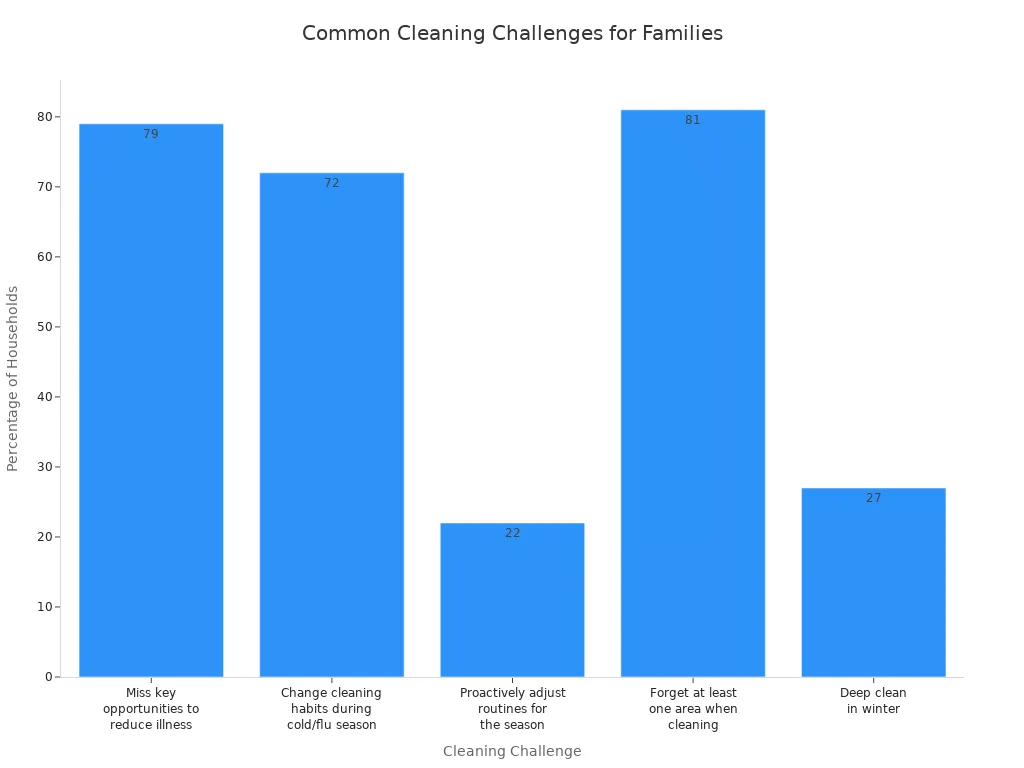
Keeping your home clean is essential for your family’s health and well-being. A tidy environment not only reduces stress but also helps prevent illness. Did you know that 79% of households miss key opportunities to reduce illness during their cleaning routines? This emphasizes the need for effective cleaning practices. By adopting some best practices, you can ensure your house remains a safe and pleasant space for everyone. Let’s explore how small changes in your cleaning habits can lead to a happier home!
Key Takeaways
Spend just 5 minutes daily putting items back in their places to prevent clutter.
Use a cleaning supplies basket to streamline your cleaning process and improve efficiency.
Create a room-by-room checklist for weekly cleaning to stay organized and avoid feeling overwhelmed.
Involve your family in cleaning tasks to teach responsibility and make the process enjoyable.
Deep clean your home at least once a season to eliminate hidden dirt and allergens.
Daily Cleaning Best Practices
Quick Tidying Tips
Keeping your home tidy doesn’t have to take hours. In fact, you can maintain a clean house with just a few minutes of effort each day. Here are some quick tidying tips that professional cleaners recommend:
Put it away! Spend about 5 minutes daily putting items back in their proper places. This simple habit prevents clutter from piling up.
Arm yourself with the proper equipment! Use basic cleaning tools and multipurpose products to streamline your cleaning process. Having everything you need at hand makes tidying up much easier.
Don’t clean in circles! Clean from top to bottom in a systematic manner. This way, you won’t have to backtrack and redo areas.
Don’t get distracted! Focus on the task at hand. Set a timer for 10 to 15 minutes to keep yourself on track.
Put some tunes on! Listening to upbeat music can make cleaning feel less like a chore and more like a fun activity.
Families typically spend around 10 to 15 minutes each day on quick tidying tasks. Involving children in these daily housekeeping duties can make the task more manageable and teach them valuable skills.
Daily Surface Wiping
Daily surface wiping is crucial for maintaining a clean and healthy environment. High-touch surfaces in your home can harbor germs, so it’s essential to sanitize them regularly. Here are some key areas to focus on:
Kitchen counters
Coffee maker handles
Touchpoints on faucets
Refrigerator surfaces
Light switches
Door handles
TV remotes
Bathroom faucet handles
To effectively disinfect these surfaces, consider using the right cleaning products. Here’s a quick comparison of some effective options based on laboratory tests:
Product Name | Description | Price | Link |
|---|---|---|---|
Clorox Free & Clear Multi-Surface Spray Cleaner | Scent-free, cleans well, no streaks, third-party certification | $15 (pack of three) | Link |
Clorox Clean-Up Cleaner + Bleach | Disinfects surfaces, effective for everyday cleaning, emits fumes | $6 | Link |
Clorox Disinfecting Bleach | Effective homemade disinfectant when diluted, harsh fumes | $10 | Link |
Clorox Free & Clear Compostable Cleaning Wipes | Gentle, non-disinfecting, good for those preferring wipes | $15 | Link |
Using a cleaning supplies basket can also improve your daily cleaning efficiency. Here’s how:
Grab a lightweight laundry basket to carry from room to room.
Focus on one room at a time to make the task manageable.
Fill the basket with items to declutter the space quickly.
Clean the room with the clutter out of the way, allowing you to focus on cleaning tasks.
Empty the basket by returning items to their designated places, promoting organization.
By following these daily cleaning best practices, you can keep your home looking great and feeling fresh!
Weekly Cleaning Routines
Keeping your home clean requires more than just daily tidying. Establishing a weekly cleaning routine can help you maintain a fresh and organized space. Let’s dive into how you can create an effective room-by-room checklist and understand the essentials of deep cleaning.
Room-by-Room Checklist
A room-by-room checklist can make your cleaning routine more efficient. By focusing on one area at a time, you can avoid feeling overwhelmed. Here’s a handy checklist to guide you through your weekly cleaning tasks:
Room | Cleaning Tasks |
|---|---|
Living Room | Dust all surfaces, clean mirrors, vacuum carpets, mop hard flooring, reset furniture |
Kitchen | Sanitize countertops, clean appliance exteriors, inspect dishes, empty trash cans |
Bathrooms | Disinfect toilets, clean mirrors, replace towels, sanitize frequently touched surfaces |
Using this checklist helps you stay organized. You can focus on one area at a time, ensuring that you complete all tasks without jumping around. This method not only saves time but also helps you maintain a sense of accomplishment as you check off each task.
Deep Cleaning Essentials
Deep cleaning is essential for maintaining a healthy home. It goes beyond surface cleaning and targets hidden dirt and allergens. Here are some key tasks to include in your deep cleaning checklist:
Clean your garbage disposal.
Sweep, dry mop, and/or vacuum the floors.
Clean your dishwasher filter.
Wash your dishwasher.
Clean stainless steel appliances.
Clean your kitchen blinds.
Wash the windows.
Wipe down walls and baseboards.
Take out trash and recycling.
Dust everything from top to bottom.
Vacuum your curtains and/or wash the blinds.
Wash all of your bedding.
Rotate your mattress.
Shampoo any rugs or carpets.
Disinfect high-touch items like doorknobs and light switches.
These tasks help eliminate allergens and keep your home hygienic. For instance, changing your sheets regularly can reduce dust mites and dead skin, while deep cleaning the kitchen and bathroom prevents the buildup of germs.
By incorporating these weekly cleaning routines, you can ensure your house remains a clean and welcoming environment for your family.
Seasonal Cleaning Strategies
Spring Cleaning Tips
Spring cleaning is your chance to refresh your home after a long winter. It’s not just about tidying up; it’s about deep cleaning and decluttering. Here are some effective strategies to make your spring cleaning a breeze:
Make a cleaning plan: Decide on your cleaning style and prioritize tasks. This helps you stay focused and organized.
Use the right products: For small areas, an all-purpose spray cleaner works wonders. For larger surfaces, consider using a powder or liquid cleaner. Specific cleaners for different surfaces, like metal polishes and granite cleaners, can also be helpful.
Recruit help: Don’t hesitate to ask family or friends to join in. Cleaning together can make the process more enjoyable and efficient.
Tackle larger items: Clean curtains and rugs first. This way, you can make the rest of your cleaning easier as you won’t have to worry about dust settling on already cleaned surfaces.
Remember, spring cleaning can significantly improve your indoor air quality. Environmental studies show that using the right cleaning products can reduce harmful air contaminants. This is especially important for children and adults with respiratory issues. So, ensure you ventilate your space while cleaning!
Preparing for Holidays
When the holidays roll around, you want your home to feel warm and inviting. Here are some tips to prepare your house for guests:
Create a welcoming atmosphere: Ensure your space feels cozy and connected. Use smart furniture choices, like durable sectionals, to accommodate more guests.
Clear clutter: Don’t forget the entryway! It’s often overlooked but sets the first impression. Make sure it’s tidy and welcoming by clearing clutter and putting out a festive welcome mat.
Focus on seating: Provide ample comfortable seating to avoid cramped spaces. A cozy dining room encourages guests to linger over meals.
Disinfect bathrooms: Clean mirrors, restock toiletries, and disinfect surfaces. A quick wipe-down can make a big difference.
By following these seasonal cleaning strategies, you can maintain a clean and inviting home throughout the year. Whether it’s spring cleaning or preparing for the holidays, a little effort goes a long way in creating a pleasant environment for you and your guests.
Involving the Family in Cleaning

Age-Appropriate Tasks
Getting your family involved in cleaning can make the process more enjoyable and effective. Assigning age-appropriate tasks helps children learn responsibility while contributing to the household. Here’s a handy table to guide you:
Age Group | Recommended Chores |
|---|---|
Toddlers (2-3) | Pick up toys, put dishes in the sink, and help with imaginative play. |
Preschoolers (3-5) | Water plants, care for pets, make beds, and clean up spills. |
Elementary (6-10) | Pack lunches, prepare simple meals, set and clear the table, and organize their room. |
Middle School (11-14) | Help with yard work, babysit younger siblings, and tackle multi-step housework. |
High School (15-18) | Clean the fridge, deep clean the kitchen, mow the lawn, and cook meals. |
Involving children in these tasks not only helps keep your home clean but also boosts their confidence. Studies show that regular chores improve academic performance and life satisfaction. Plus, kids develop problem-solving skills as they tackle different cleaning challenges.
Creating a Cleaning Schedule
A structured cleaning schedule can make a world of difference in maintaining a clean home. Here are some effective methods to create one:
Method | Description | Resources Needed | Timeline |
|---|---|---|---|
Involve Family Members | Engage everyone in the cleaning process to ensure shared responsibility. | Feedback from family | Ongoing |
Set Realistic Schedules | Create a cleaning routine that fits your family’s lifestyle. | Personal observations | Weekly review |
Make Necessary Adjustments | Regularly evaluate and adjust the schedule based on feedback. | Revised schedule | End of Week 7 |
Use Digital Tools | Utilize apps or calendars to set reminders and track progress. | Digital calendar or app | Ongoing |
Having a cleaning schedule fosters cooperation among family members. It breaks down tasks into manageable chunks, making cleaning less overwhelming. Plus, a tidy home promotes a sense of calm and reduces stress. When everyone pitches in, you create a harmonious living environment that everyone can enjoy.
By involving your family in cleaning, you not only keep your home organized but also teach valuable life skills. So, gather your family, assign tasks, and make cleaning a fun and rewarding experience!
Maintaining a clean home is more than just a chore; it’s a pathway to a healthier and happier family life. By adopting daily tidying habits, establishing weekly routines, and embracing seasonal cleaning strategies, you can create a welcoming environment.
Here are some key benefits of these practices:
Regular cleaning reduces allergens like dust and pet dander.
Improved air quality can alleviate allergy symptoms.
A clean space boosts mental well-being and reduces anxiety.
Remember, a clean home fosters a positive emotional state for everyone. So, gather your family, make cleaning a fun activity, and enjoy the rewards of a tidy space!
