

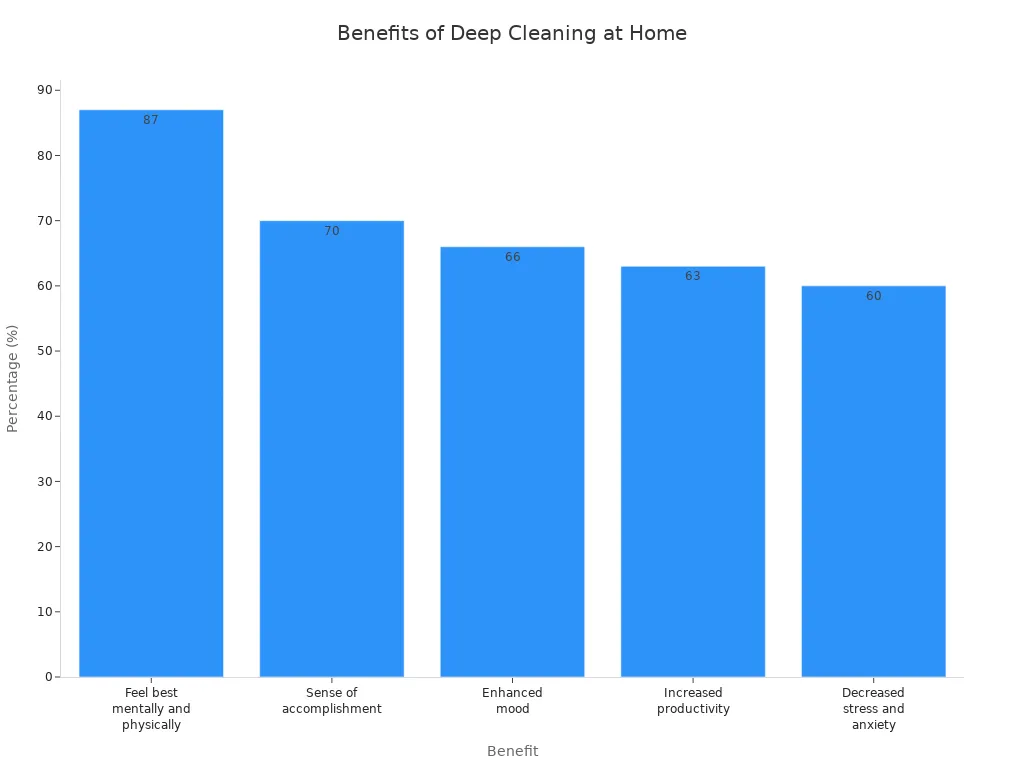
Deep cleaning your home offers numerous benefits that can greatly enhance your health and well-being. In fact, studies show that 87% of people feel better mentally and physically in a clean environment. A systematic approach to cleaning helps you tackle dust and allergens effectively, leading to a healthier space. It also makes the task more manageable and less overwhelming.
Before you dive in, gather your supplies. Here’s a quick checklist to get you started:
2 mops (wet and dry)
1 vacuum or broom
4 microfiber cloths
All-purpose cleaner
Trash bags
Set aside some time, and you’ll soon enjoy the satisfaction of a sparkling clean home!
Key Takeaways
Deep cleaning improves your health and well-being by reducing dust and allergens in your home.
Gather essential cleaning supplies before starting to make the process smoother and more efficient.
Regularly vacuum upholstery to prevent allergens and maintain a fresh appearance in your living space.
Use natural cleaners like vinegar and baking soda for effective and safe cleaning of appliances and surfaces.
Create a cleaning schedule to manage deep cleaning tasks and maintain a consistently clean home.
Living Room Cleaning
Dusting and Wiping Surfaces
Start your living room deep cleaning by dusting and wiping surfaces. This step is crucial for maintaining a healthy environment. Here’s how to do it efficiently:
Use a dry, soft cotton cloth or an electrostatically charged dust cloth. These materials effectively trap dust without spreading it around.
Fold the cloth to create multiple surfaces. This way, you can use it longer before needing to wash it.
Dust systematically from top to bottom. Begin with higher surfaces like shelves and light fixtures, then move down to tables and other furniture. Don’t forget small items like picture frames and plant leaves.
Avoid using a damp cloth, as it may smear dust. If you prefer a damp cloth, make sure it’s only slightly wet.
Neglecting this step can lead to poor indoor air quality, which may cause respiratory problems and allergic reactions. Dust mites and mold thrive in unclean environments, exacerbating respiratory illnesses.
Vacuuming Upholstery
Next, tackle your upholstery. Regular vacuuming keeps your living room looking fresh and clean. Here’s what you should do:
Vacuum your upholstery regularly to remove surface dirt and pet hair. This helps maintain a clean appearance and prevents allergens from accumulating.
Brush or lint-roll your upholstery weekly to catch any pet hair and dander that the vacuum might miss.
By keeping your upholstery clean, you reduce the risk of skin infections and gastrointestinal issues. Plus, it helps you avoid long-term health problems like cardiovascular disease and neurological disorders.
With these steps, your living room will not only look great but also feel healthier. Remember, a clean space contributes to your overall well-being!
Kitchen Deep Clean
Cleaning Appliances
Cleaning your kitchen appliances is essential for maintaining a hygienic cooking environment. Start with the microwave, oven, and stovetop. Here’s how to tackle each one effectively:
Microwave: Fill a bowl with water and vinegar, then heat it for 4-5 minutes. The steam will loosen grime, making it easier to wipe down. Afterward, use a soft cloth to clean the interior and exterior. For odors, heat a bowl of water with lemon juice in the microwave.
Oven: Rub a lemon on the oven surfaces. Then, heat it with water and lemon halves to create steam. This technique softens stuck-on food, making it easier to clean. Avoid using harsh oven cleaners, as they can damage the appliance.
Stovetop: Sprinkle baking soda on a wet stovetop and let it sit for a few minutes. Gently scrub with a soft scrubber to remove any stubborn stains. This method is efficient and safe for most stovetop surfaces.
Stainless Steel Appliances: Use coconut oil on a paper towel to polish and remove fingerprints. This not only cleans but also adds shine to your appliances.
Appliance | Cleaning Technique |
|---|---|
Microwave | Use steam with vinegar: Heat a bowl of water with vinegar for 4-5 minutes to loosen grime. |
Oven | Use steam with lemon: Rub lemon on the oven, heat with water and lemon halves to soften stuck-on food. |
Stovetop | Sprinkle baking soda on a wet stovetop, let sit, then scrub gently with a soft scrubber. |
Stainless Steel | Polish with coconut oil: Use paper towels and coconut oil to remove fingerprints and shine the surface. |
Scrubbing Countertops
Next, let’s focus on your countertops. These surfaces can harbor bacteria and stains, so it’s crucial to clean and sanitize them regularly. Here are some effective products and methods:
Clorox Disinfecting Wipes: These wipes kill 99.9% of bacteria and are great for quick clean-ups. Just wipe down the surfaces and let them air-dry for 10 seconds. Rinse food prep areas with water afterward.
StoneTech Daily Cleaner: If you have granite or marble countertops, this cleaner is safe and effective. Follow the instructions on the label for best results.
Pine-Sol All-Purpose Cleaner: Mix 1/4 cup with a gallon of water for a budget-friendly option. Let it sit for 10 minutes before rinsing to tackle greasy messes.
Seventh Generation Free & Clear All-Purpose Cleaner: This environmentally friendly cleaner is safe for various surfaces, though it’s not a disinfectant.
Product Name | Features | Usage Instructions |
|---|---|---|
Clorox Disinfecting Wipes | Kills 99.9% of bacteria, deodorizes, cleans grease and grime | Allow to air-dry for 10 seconds after use, rinse food prep areas with water |
StoneTech Daily Cleaner | Safe for granite, quartz, and marble | Use as directed for maintaining stone surfaces |
Pine-Sol All-Purpose Cleaner | Budget-friendly, effective on greasy messes | Mix 1/4 cup with a gallon of water, let sit for 10 minutes before rinsing |
Seventh Generation Free & Clear All-Purpose Cleaner | Environmentally friendly, scent-free | Safe for various surfaces, not a disinfectant |
After cleaning, take a moment to organize your pantry items. Here are some tips to keep everything in order:
Use baskets for bulkier items to keep them contained and easily accessible.
Keep a shopping list in the pantry to track items that need replenishing.
Label shelves and containers to maintain organization.
Store similar items together to streamline access.
By following these steps, you’ll not only deep clean your kitchen but also create a more efficient and organized space. A clean kitchen is essential for your health and well-being, so make it a priority!
Bathroom Deep Cleaning
Scrubbing Toilets
Cleaning the toilet might not be the most glamorous task, but it’s essential for maintaining a hygienic bathroom. Here’s a step-by-step guide to help you scrub your toilet effectively:
Drain the Toilet Bowl: Quickly pour a half-gallon of water into the toilet to trigger the flush action and empty the bowl.
Apply Cleaner: Start under the rim and apply toilet bowl cleaner around the inside. Let it sit for up to 10 minutes to ensure effective sanitization.
Scrub the Bowl: Use a toilet brush to scrub the bowl. Focus on stubborn stains and make sure to clean under the lip and down into the drain.
Flush: Rinse the bowl by flushing, ensuring the lid is closed to avoid splatter.
Clean External Surfaces: Use disinfecting wipes or a spray with a rag to wipe down all external surfaces, especially the seat and handle.
Detail Cleaning: Grab an old toothbrush for hard-to-reach areas like the toilet seat hinge.
Sanitize the Brush: After use, spray the toilet brush with disinfectant and rinse it in hot water.
To maintain optimal hygiene, aim to deep clean the bathroom at least once a week. This routine allows you to pay thorough attention to critical areas like the toilet, sink, and shower. Quick daily touch-ups can help prevent grime buildup, ensuring a consistently clean environment.
Cleaning Showers
Next, let’s tackle the shower. A clean shower not only looks good but also helps prevent mold and mildew. Here’s how to clean your shower efficiently:
Remove Items: Start by taking out all your shower products. This gives you a clear space to work and allows you to clean the surfaces underneath.
Apply Cleaner: Use a bathroom cleaner or a mixture of vinegar and baking soda. Spray the cleaner generously on the walls and floor, focusing on grout lines and corners.
Let It Sit: Allow the cleaner to sit for about 10-15 minutes. This gives it time to break down soap scum and grime.
Scrub: Use a scrub brush or sponge to scrub the surfaces. Pay special attention to areas with heavy buildup. For glass doors, a squeegee can help remove soap residue.
Rinse: Rinse thoroughly with warm water to wash away the cleaner and any loosened dirt.
Dry: Wipe down surfaces with a microfiber cloth to prevent water spots and keep your shower looking pristine.
After cleaning, take a moment to organize your toiletries. Here are some effective strategies to keep everything in order:
Strategy | Description |
|---|---|
Use bins | Add small bins or containers to organize items in the medicine cabinet. |
Use Museum Gel | Apply Museum Gel to the bottom corners of bins in drawers to prevent sliding. |
Add stacking drawers | Maximize vertical space in cabinets with stacking drawers for easy access. |
Use stacking pantry bins | Utilize stacking pantry bins under the sink for accessible storage. |
Label items | Labels help maintain organization and ensure everyone knows where items belong. |
Keep frequently used items in vanity | Limit vanity contents to items used often to reduce clutter. |
Have a catch-all basket | Use a basket for items that are needed occasionally, keeping them organized. |
By following these steps, you’ll not only deep clean your bathroom but also create a more organized and efficient space. A clean bathroom is essential for your health and well-being, so make it a priority!
Bedroom Cleaning Guide
Dusting Furniture
When you deep clean bedrooms, start with dusting your furniture. This step helps reduce allergens and keeps your space fresh. Here’s a simple checklist to follow:
Step | Description |
|---|---|
1 | Mop, dust, and vacuum to reduce dust and dust mites. |
2 | Damp-mop hard floors once a day. |
3 | Dust and vacuum once or twice a week to remove allergens. |
4 | Use a dry cloth to wipe hard surfaces. |
5 | Vacuum carpets and cloth-covered furniture. |
6 | Use a vacuum with a HEPA filter or double-thickness bag. |
7 | Wear a mask while cleaning to avoid inhaling dust. |
8 | Consider wet-vacuum cleaning or steam cleaning carpets. |
By following these steps, you’ll create a cleaner environment that promotes better health. Remember, dusting isn’t just about looks; it’s about your well-being too!
Organizing Closets
Next, let’s tackle your closet. A well-organized closet can make your mornings smoother and your space feel more inviting. Here are some effective methods to keep your closet in order:
Regularly clean and dust the closet.
Organize your closet seasonally by rotating out wardrobe items.
Assess the current state of your closet and decide which items are relevant for the upcoming season.
You can also use these handy tools to maximize your closet space:
Type | Item |
|---|---|
Modular systems | Customizable arrangement of components |
Built-in systems | Permanent solutions tailored to specific dimensions |
Hooks | Easy access for frequently used items |
Shelf dividers | Keeps shelves neat by separating items |
Lighting | Enhances visibility and organization |
Non-slip hangers | Prevents slipping of delicate items |
Slimline hangers | Maximizes space for clothing |
Bins | Stores smaller items like accessories |
Tension rods | Provides extra hanging space |
Over-the-door organizers | Efficient storage for shoes and accessories |
By organizing your closet, you’ll not only save time but also create a more peaceful atmosphere in your bedroom. A clean and tidy space can significantly improve your mood and productivity!
Deep cleaning your home can feel overwhelming, but breaking it down into manageable steps makes it easier. Here’s a quick checklist to remember:
Wipe down worktops and surfaces.
Vacuum under cushions and furniture.
Clean your appliances and fixtures.
Dust decor and electronics.
Wash bedding and flip your mattress.
Regular upkeep is essential. It enhances your mental well-being, reduces allergens, and prolongs the life of your furnishings. To make cleaning manageable, create a schedule. Consider deep cleaning each room every few months, focusing on high-traffic areas monthly. With a plan in place, you’ll maintain a clean and inviting home effortlessly!
